
How to Grow a Small Business: Branding, Marketing & Business Pivots
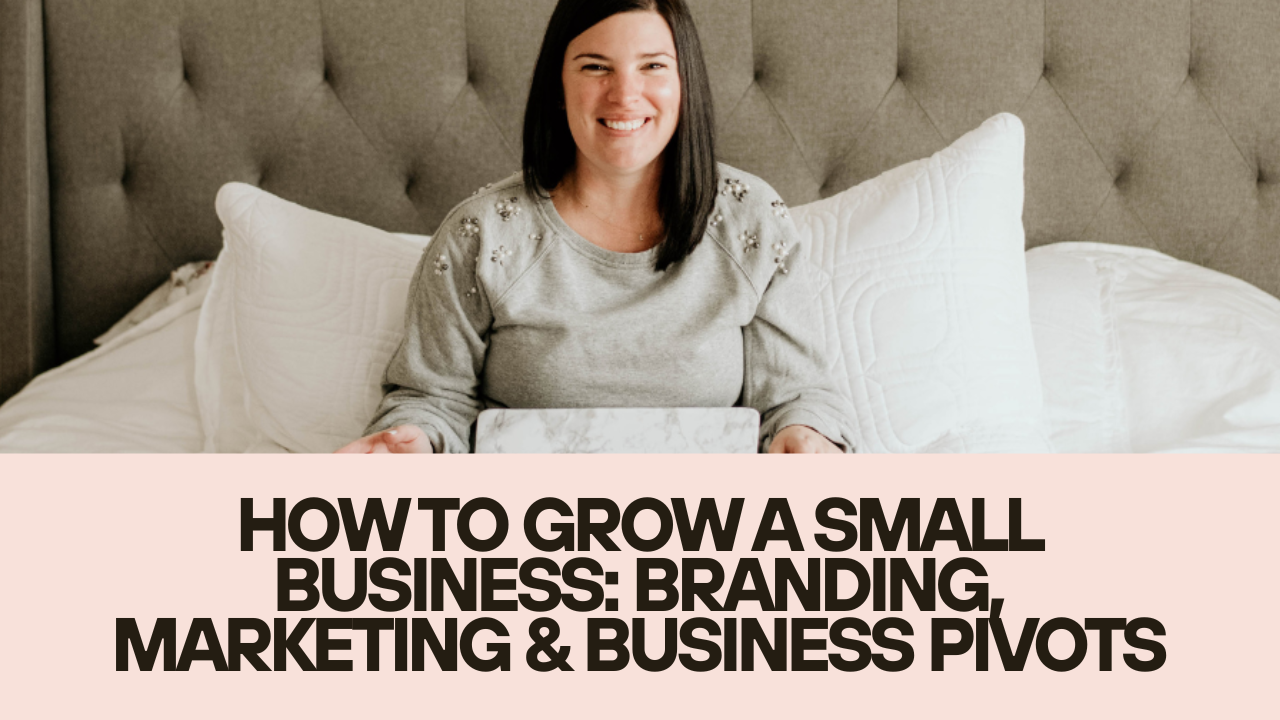
What if growing your small business isn't about doing more, creating more content, or finding the next marketing strategy, but about recognizing what's already working and being willing to change what isn't?
For many small business owners, growth can feel like a constant search for new customers, better marketing strategies, and ways to increase sales. But as your business evolves, the strategies that helped you get started aren't necessarily the ones that will take you to the next stage.
Sometimes you need to refine your brand messaging, reconsider who you're trying to reach, or make the difficult decision to stop doing something that has always been part of your business.
In this episode of Modern Marketing Made Simple, I sat down with Rebecca Ogilvie, founder of The Detour Co., to talk about small business growth strategies, brand positioning, and the importance of allowing your business to evolve.
Rebecca started her entrepreneurial journey hosting women's wellness retreats before eventually creating her own natural skincare products. What began with handmade products sold at farmers markets has grown into a Canadian skincare brand with a much more specific audience and purpose.
Her story is a great example of how customer feedback, strategic marketing, and knowing when to pivot your business can help you build a stronger brand.
Your Customers Can Help Shape Your Business
One of the most interesting parts of Rebecca's story is how much her customers influenced the direction of her business.
When she first started selling skincare at farmers markets, she wasn't launching a complete product line with a detailed marketing plan. She was selling a few products she had already been making for her family, including body butter, bug spray, and sun cream.
But something important happened at those markets.
People started asking questions.
Could she make a magnesium spray? Had she considered creating a face cream with honey? What about products for specific skincare concerns?
Those conversations became a valuable source of market research.
Rebecca was able to hear directly from potential customers about what they wanted, what they were struggling with, and which products they couldn't easily find elsewhere.
Over time, that feedback influenced her product development and helped shape the direction of The Detour Co.
This is an important lesson in how to grow a small business. Your customers can often tell you more about what your business needs than another round of guessing or researching your competitors.
Customer feedback can also help you identify your target audience. When you pay attention to who is buying, what they're asking for, and why they're choosing your products, you begin to understand which people your business is best positioned to serve.
Try this in your business: Think about the conversations you've had with customers over the past few months. What questions keep coming up? What problems are people asking you to solve? Are there products, services, or topics that consistently generate more interest than others?
Look for patterns. Those conversations may reveal opportunities to refine your offers, improve your messaging, or create content that speaks more directly to your audience.
How to Build Brand Awareness Beyond Social Media
One of my favourite parts of this conversation was Rebecca's advice for entrepreneurs who are just getting started.
She made a simple but important point: You can't sell anything if people don't know you exist.
And while social media marketing is an incredibly valuable tool for small businesses, it shouldn't necessarily be your only strategy for getting discovered.
Rebecca built much of her early brand awareness by showing up at farmers markets, speaking with customers, and getting her products into people's hands.
She also recommends networking events, boutique partnerships, pop-ups, and collaborations with complementary businesses.
For a jewellery brand, that might mean partnering with a clothing boutique or collaborating with a fashion business. For another business, it could mean attending industry events, developing referral relationships, or finding opportunities to introduce your services to an established community.
The goal is to get your business in front of people who are genuinely likely to become customers.
Growing a business beyond social media doesn't mean abandoning Instagram or other online platforms. It means creating more opportunities for people to discover your brand and then using your online presence to continue building those relationships.
I think this is something small business owners sometimes overlook. We spend so much time thinking about what to post that we forget how valuable it can be to put ourselves in situations where we can meet potential customers directly.
Try this in your business: Identify three places or opportunities where your ideal customers are already spending their time.
Consider whether you could attend an event, collaborate with another business, participate in a local community, or introduce yourself to someone who serves a similar audience.
Then think about how your social media content can support those connections. When someone discovers your business in person, what will they find when they visit your Instagram account or website?
When to Pivot Your Business and Refine Your Brand Positioning
One of the biggest lessons from Rebecca's entrepreneurial journey is that businesses are meant to evolve.
The Detour Co. didn't begin with the same brand positioning strategy it has today.
Originally, Rebecca was creating natural alternatives to conventional skincare products for families. Her product line included seasonal items like bug spray and sun cream, and farmers markets were an important part of how she built her customer base.
But as her business grew, she realized something was changing.
The Detour Co. was becoming a face care brand, with a growing focus on helping women bring their skin back into balance naturally.
Her audience was becoming more specific, and her business was developing a clearer direction.
That meant some of the strategies that had worked in the beginning were no longer the best use of her time.
Rebecca eventually made the decision to stop attending farmers markets, even though those events had played an important role in building her business.
It wasn't because they had failed.
It was because her business had changed.
She had built the online brand she originally wanted to create, and continuing to devote time and energy to seasonal markets was taking her attention away from the next stage of growth.
This is an important part of business growth and brand evolution. Sometimes the things that helped you build your business aren't the things that will help you continue growing it.
It also raises an important question for anyone wondering when to pivot your business.
Are you continuing to do something because it's still effective, or because it's what you've always done?
Rebecca also shared that not every business decision needs months of research and consideration.
Some decisions are significant and deserve careful thought. But other changes, like updating your graphics, refining your messaging, or making adjustments to your website, can happen relatively quickly.
You don't necessarily need a complete rebrand every time your business evolves.
Sometimes learning how to rebrand your business simply means getting clearer about who you serve, what you offer, and how you communicate your value.
Try this in your business: Look at your current website, social media bio, offers, and content. Do they accurately reflect the business you're building today?
Consider whether your target audience has changed, whether your messaging still speaks to their needs, and whether you're continuing to promote products or services that no longer align with your goals.
You may discover that a few intentional changes could make your brand positioning much clearer.
Use Your Numbers to Make Better Business Decisions
Another valuable part of my conversation with Rebecca was her approach to deciding which products should stay in her business and which ones needed to go.
As entrepreneurs, it's easy to become emotionally attached to our ideas.
We remember how much work went into creating something, how excited we were to launch it, or how important it was during the early stages of our business.
But that doesn't necessarily mean it still makes sense to keep selling it.
Rebecca shared that her decision-making process involves looking carefully at her numbers.
Which products are selling consistently? Which ones aren't? Which products support the direction she wants her business to take?
One particularly interesting example was her decision to move away from bug spray.
It was a product that generated approximately $10,000 to $20,000 annually, making it a significant source of seasonal revenue.
But continuing to promote it required her to shift her marketing focus away from the face care products she wanted to build her brand around.
By letting it go, she could focus on creating a more consistent, year-round marketing strategy.
That doesn't mean every slow-selling product should automatically be discontinued.
Rebecca also shared the example of a deodorant she developed that took many formulations to get right. Although it wasn't initially performing as well as she hoped, she believed in the product and chose to continue developing its place in her business. Over time, it began gaining popularity.
The lesson is that business decisions require both data and strategy. A product can generate revenue without necessarily supporting your long-term goals, while another product may deserve more time to reach its potential.
This applies to service-based businesses too.
You might have an offer that sells well but requires so much time that it prevents you from growing other parts of your business. Or you might be spending hours on a marketing strategy that generates engagement but very few inquiries or sales.
Try this in your business: Review your products, services, or marketing activities and ask yourself:
-
Which ones generate the most revenue or meaningful business opportunities?
-
Which ones require the most time and energy?
-
Which ones are attracting the customers you most want to work with?
-
Are there offers or activities you're maintaining simply because they've always been part of your business?
-
Where could you redirect your time to support your next stage of growth?
The goal isn't always to eliminate everything that isn't immediately profitable. It's to make more intentional decisions about where your time, energy, and resources are going.
Key Takeaways: Small Business Growth Strategies That Work
If you're looking for practical ways to grow your small business, here are five lessons from Rebecca's experience:
-
Listen to your customers. Real conversations can help you identify your target audience, discover new opportunities, and improve the products or services you offer.
-
Build brand awareness beyond social media. Networking, collaborations, events, and in-person connections can introduce your business to new audiences and support your online marketing.
-
Allow your brand positioning to evolve. As your business grows, you may need to refine your brand messaging, adjust your offers, or become more specific about who you serve.
-
Use data to guide your decisions. Look at sales, profitability, time commitments, and long-term goals when deciding which products, services, and marketing strategies deserve your attention.
-
Recognize when it's time to pivot. Something can have been incredibly valuable to your business in the past without needing to remain part of its future.
The biggest takeaway from this conversation is that small business growth isn't always about adding more products, creating more content, or finding another marketing strategy. Sometimes it's about becoming more intentional with what you're already doing.
After listening to this episode, you'll understand how to evaluate what's working in your business, refine your brand positioning, and use customer feedback, strategic marketing, and intentional business decisions to support your next stage of growth.
Listen to the full episode here:
Meet Rebecca Ogilvie from The Detour Co.
Rebecca Ogilvie is the founder of The Detour Co., a Canadian natural skincare brand based in Muskoka, Ontario.
Her entrepreneurial journey began in the wellness industry, where she hosted women's retreats and taught yoga, meditation, and Reiki. After becoming a mother and relocating to Muskoka, she began selling handmade skincare products at local farmers markets.
What started with a small collection of natural products has evolved into a face care brand focused on helping women bring their skin back into balance.
Through The Detour Co., Rebecca combines her experience in wellness with her belief that taking time to care for yourself is an important part of creating a life you love.
Connect with Rebecca
-
Instagram: www.instagram.com/thedetourco.muskoka
-
Website: www.thedetourco.com
Want More? Let's Talk About Customer Loyalty.
Getting your business in front of new customers is an important part of small business growth, but what happens after someone makes their first purchase?
In my conversation with Shannon from Smithery Style, we talk about how to build customer loyalty, create meaningful shopping experiences, and encourage repeat purchases.
How to Build Customer Loyalty and Increase Repeat Sales | with Smithery Style
It's a great follow-up to Rebecca's episode because both conversations explore how relationships, customer experience, and understanding your audience contribute to building a successful business.
Want to Make Social Media Simpler?
You don't need to spend hours creating content, chasing trends, or trying to figure out what to post next.
Inside the Modern Marketing Hub, you'll find practical social media strategies, fresh content ideas, audience growth training, and resources to help you build your brand and grow your business.
Think of it as having a social media manager in your pocket.
Have a Business Story Worth Sharing?
The Modern Marketing Podcast features real conversations with women building businesses, sharing the lessons they've learned, the challenges they've faced, and the strategies that have helped them grow.
If you're a small business owner, social seller, or personal brand with a story that could inspire and teach other entrepreneurs, I'd love to hear from you.
Let's Connect!
I'm Lori Ervin, founder of Level Up Marketing Co., where I help women building online businesses simplify their social media, create content that connects, and turn their marketing into meaningful business growth.
Through done-for-you social media management, content creation, and the Modern Marketing Hub, I help make marketing feel a whole lot more manageable.
Follow along for practical social media tips, content ideas, marketing strategies, and a behind-the-scenes look at building a business.
Instagram: www.instagram.com/theloriervin
Website: www.loriervin.com
Stay connected with new blog posts, podcast episodes and business tips!
Sign up below to hop on my email list ...not to worry, I don't believe in spam.
